All Resources

Topic

Context Anchors

24 guides on context anchors.

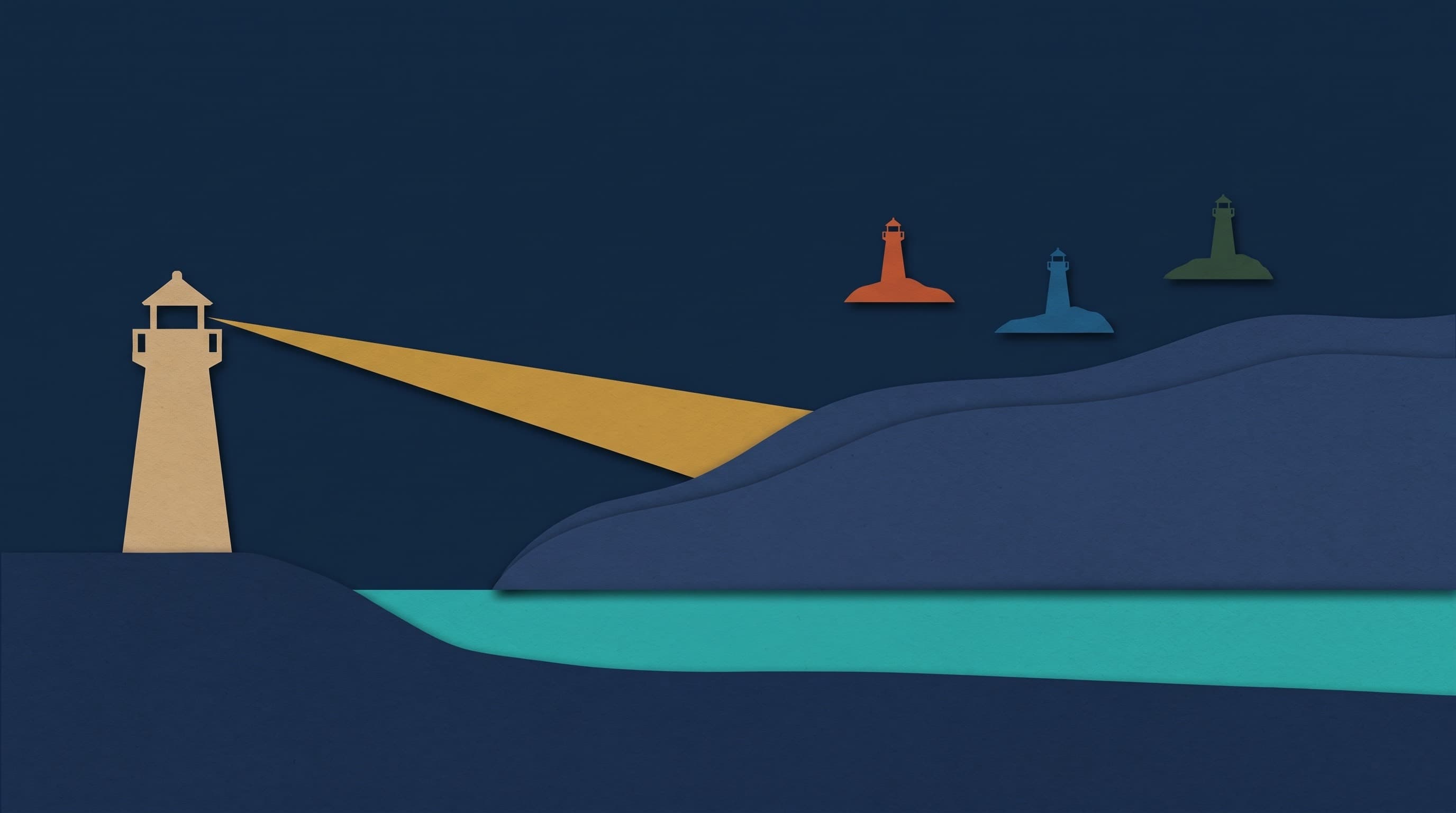
A layered cut-paper collage on a deep navy field: a tall sand-colored paper lighthouse stands on a navy headland at the left, casting one clean wedge of golden paper across the frame that stops where it meets a long navy paper ridge rising from the lower right; a calm teal band of water runs along the bottom, and three small unlit paper lighthouses in terracotta, ocean blue, and cypress green sit far beyond the ridge, each on its own little island, separate and dark. Every shape shows paper grain and casts a soft short shadow on the layer beneath.

September 11, 2026 · 7 min read

How to Use Gemini Gems (and Where They Fall Short)

Gemini Gems save your instructions and knowledge files into a custom assistant. Here's how to build one properly, the ten-file limit, and the one thing Gems do better than ChatGPT or Claude.

Read
A layered cut-paper collage: an old sand-colored paper chart fills the frame, its lower-right corner curling up and peeling away to reveal a fresh teal and deep-navy chart beneath with a crisper coastline and a small navy paper anchor; a single golden paper ribbon runs along the seam between old and new, with terracotta and ocean-blue cut-paper islands at the edges.

September 9, 2026 · 6 min read

How to Keep Your AI Context From Going Stale

Your AI context has a half-life, and it's different for every anchor. Here's how often to refresh each one, what to delete, and how to tell it's already stale.

Read
A flat-vector illustration on a deep navy field: one luminous golden mooring buoy at center, held on station by a taut golden chain running down to a small glowing weight on the seabed, while four pale grey buoys with violet bands drift at varied heights around it, each trailing a short broken chain that connects to nothing, over a faint antique nautical chart of coastline contours, thin grid lines, scattered dots and tick marks, and a pale compass rose at the right edge, with thin golden current lines and ocean-blue accents threading the composition.

September 7, 2026 · 6 min read

Why Does ChatGPT Forget Everything? (And How to Stop Re-Explaining Yourself)

Every new AI chat starts from zero, and memory features only partly fix it. Here's why ChatGPT forgets everything between conversations, and how to stop re-explaining yourself in every new window.

Read
A flat-vector illustration on a warm sand field graduating to soft peach: a terracotta island harbor with a small jetty at lower left, a deep-blue island harbor with several jetties at center, and a dark cypress-green harbor entering from the upper-right corner, all three joined by a single continuous glowing golden current line that threads through them in sequence, with one luminous golden rolled chart travelling along the line between the terracotta and blue harbors, over a faint antique nautical chart of coastline contours, thin grid lines, and two pale compass roses.

September 4, 2026 · 7 min read

How to Move Your AI Context Between ChatGPT, Claude, and Gemini

You can't export ChatGPT's memory into Claude or Gemini. Here's what actually travels between AI tools, what doesn't, and how to move your context in one pass.

Read
A flat-vector illustration on a deep navy field: four moored buoys in a row, in terracotta, muted violet, teal, and violet, each banded with a cream sash and each encircled by its own separate loop of glowing golden current lines that never reaches the buoy beside it. A thin gold chain drops from every buoy toward the seabed, over a faint antique nautical chart of coastline contours, depth soundings, and thin grid lines.

September 2, 2026 · 6 min read

How to Use ChatGPT Projects (and Where They Fall Short)

ChatGPT Projects hold your files, chats, and instructions in one workspace. Here's how to set one up properly, the per-plan limits, and where they stop.

Read

A flat-vector illustration on a soft seafoam-teal field: a deep navy ship's wheel at center-right with a thin golden rim and a small golden compass rose at its hub, ringed by concentric golden current lines that unwind and sweep left across the full width of the frame, over a faint antique nautical chart of coastline contours, depth contours, and thin grid lines dotted with small islands in terracotta, cypress green, and muted violet.

August 28, 2026 · 6 min read

The Best AI Setup for Writers (2026)

The best AI setup for writers is three layers deep, and only one of them is a tool. Here's the model, the voice file, and the material that make AI actually useful for writing.

Read
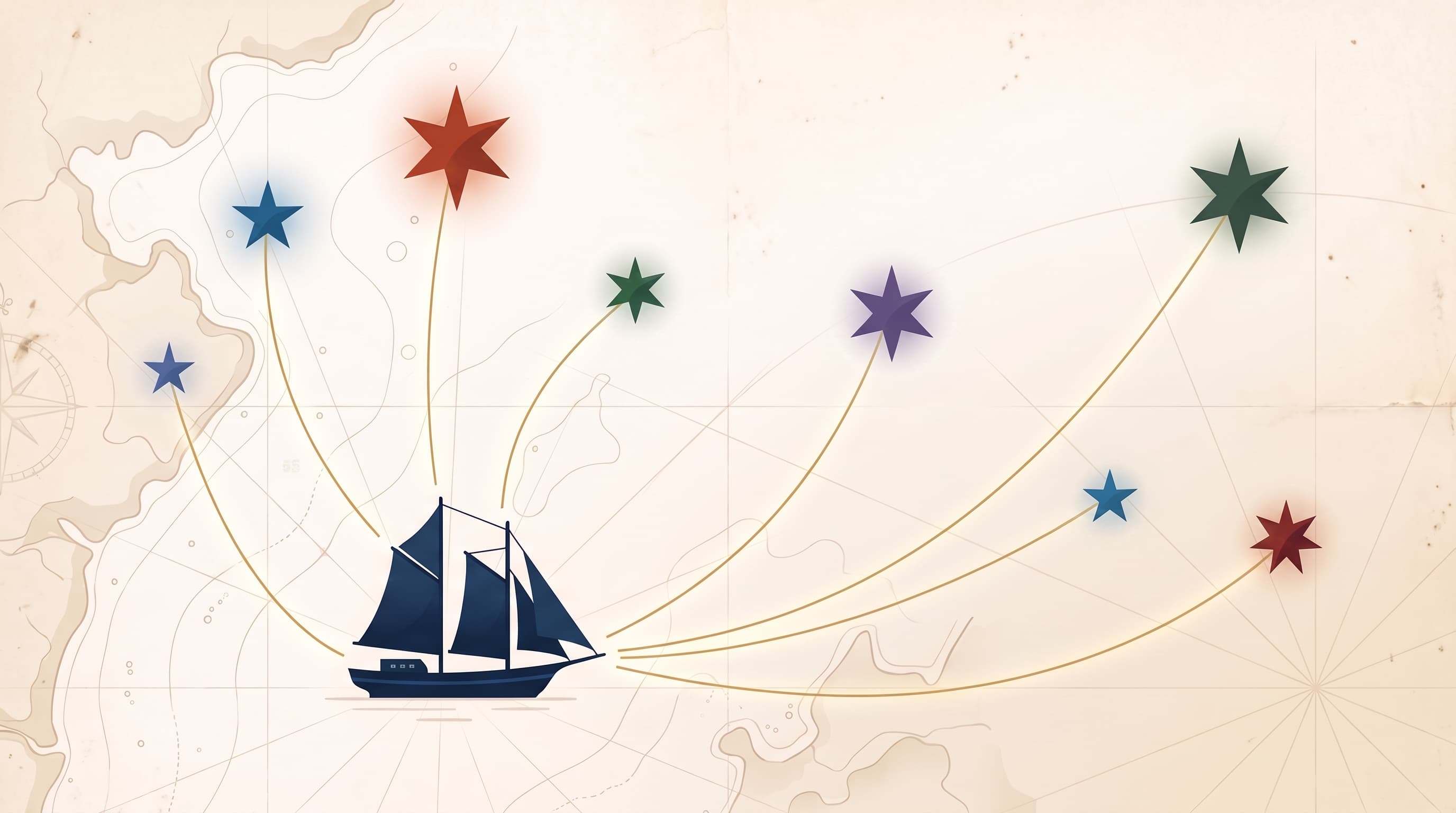
A flat-vector illustration on a warm parchment aged-map field: a navy sailing ship sits at lower center-left, with eight scattered navigational stars in terracotta, ocean blue, cypress green, violet, and deep red arranged around and above it, each joined back to the ship by a single thin, gracefully curving golden sight-line, over a faint antique nautical chart of coastline contours, depth contours, a compass rose, and thin grid lines.

August 26, 2026 · 6 min read

What Is an Influence Roster?

An Influence Roster is the context file that tells AI who the people in your life are and how each one actually works. Here's what goes in one and how to build it.

Read
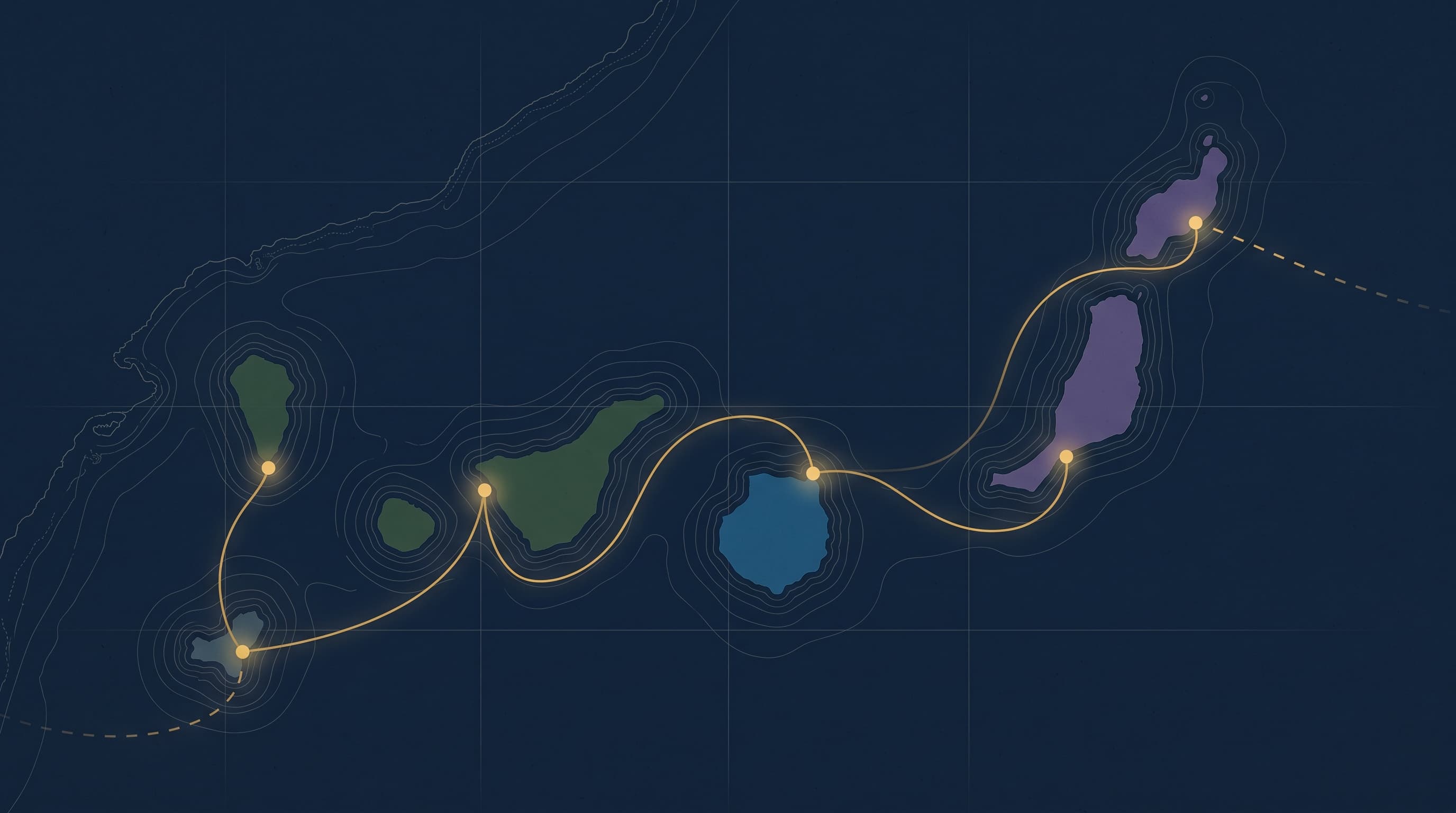
A flat-vector illustration on a deep navy field: a chain of stylised islands in cypress green, ocean blue and muted violet arranged in a meandering sequence from lower left to upper right, each ringed by faint concentric depth contours and joined by a curving golden route line that touches a small luminous waypoint at every island and continues past the last one as a dashed line, over a faint antique nautical chart of coastline contours and thin grid lines.

August 24, 2026 · 6 min read

What Is a Timeline Anchor?

A Timeline anchor is the context file that gives AI the arc of your life — your chapters, turning points, and trajectory. Here's what goes in one.

Read
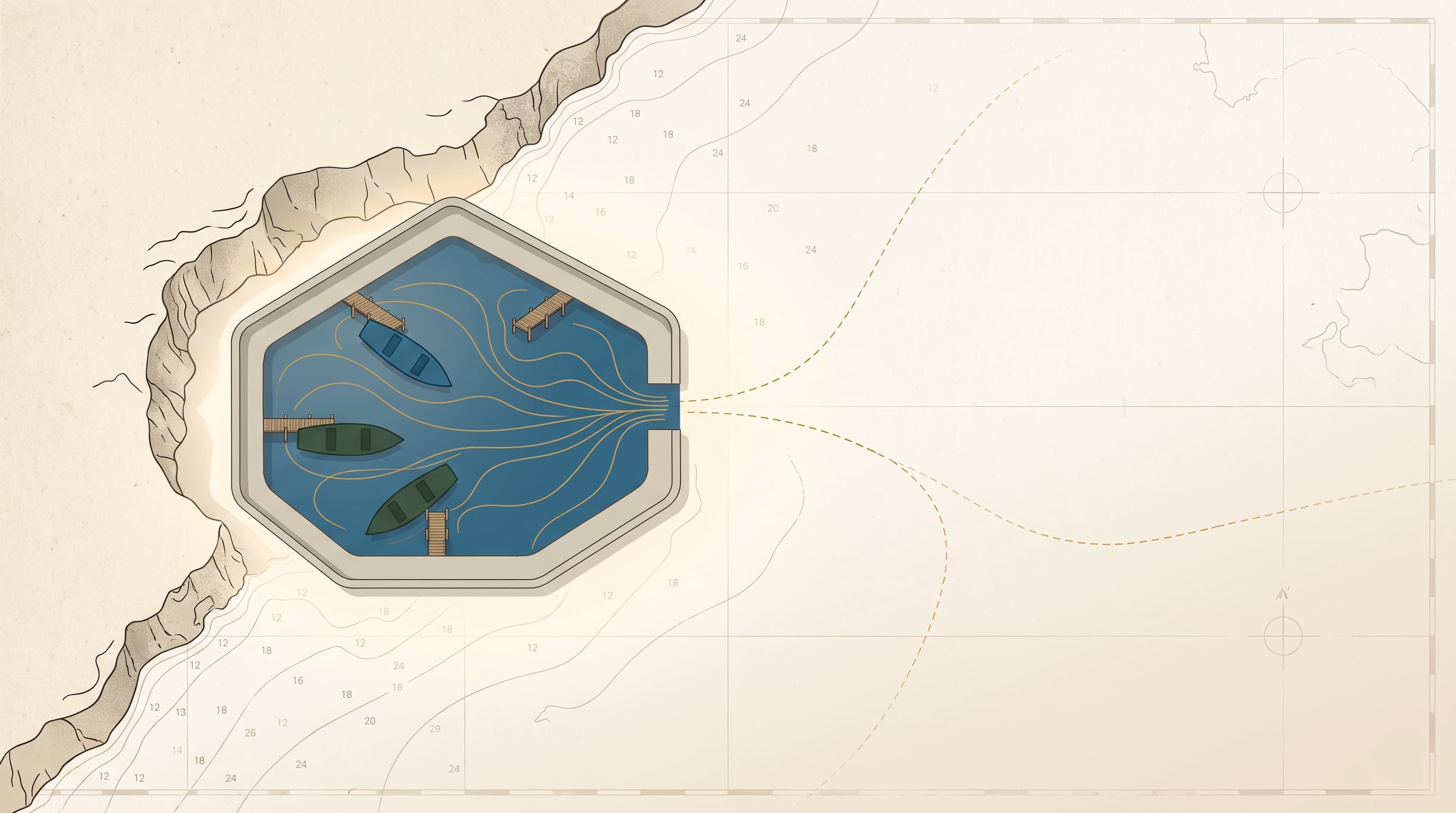
A flat-vector illustration on a parchment-cream field: an octagonal walled harbor set into a rocky coastline, holding three small boats at wooden jetties in ocean blue and deep cypress green. Golden current lines thread the blue water inside the harbor and converge at its narrow mouth, where they turn into faint dashed routes that trail off across an antique nautical chart of coastline contours, grid lines, and depth soundings.

August 21, 2026 · 6 min read

How to Use Claude Projects (and Where They Fall Short)

Claude Projects give you a workspace with its own knowledge base and instructions. Here's how to set one up properly, and the one limit nobody mentions until you have eight of them.

Read

A flat-vector illustration on a deep navy field: an open sea chest glowing golden at lower left, with thin golden current lines flowing out of it to a scattered archipelago of five small glowing islands in terracotta, violet, ocean blue, teal, and gold, across a faint antique nautical chart with coastline contours, depth soundings, tiny ships, and lighthouses.

August 10, 2026 · 5 min read

What Is a Story Bank?

A Story Bank is the context file that holds the stories you tell more than once — your best material, written down so AI can use it. Here's what goes in one.

Read
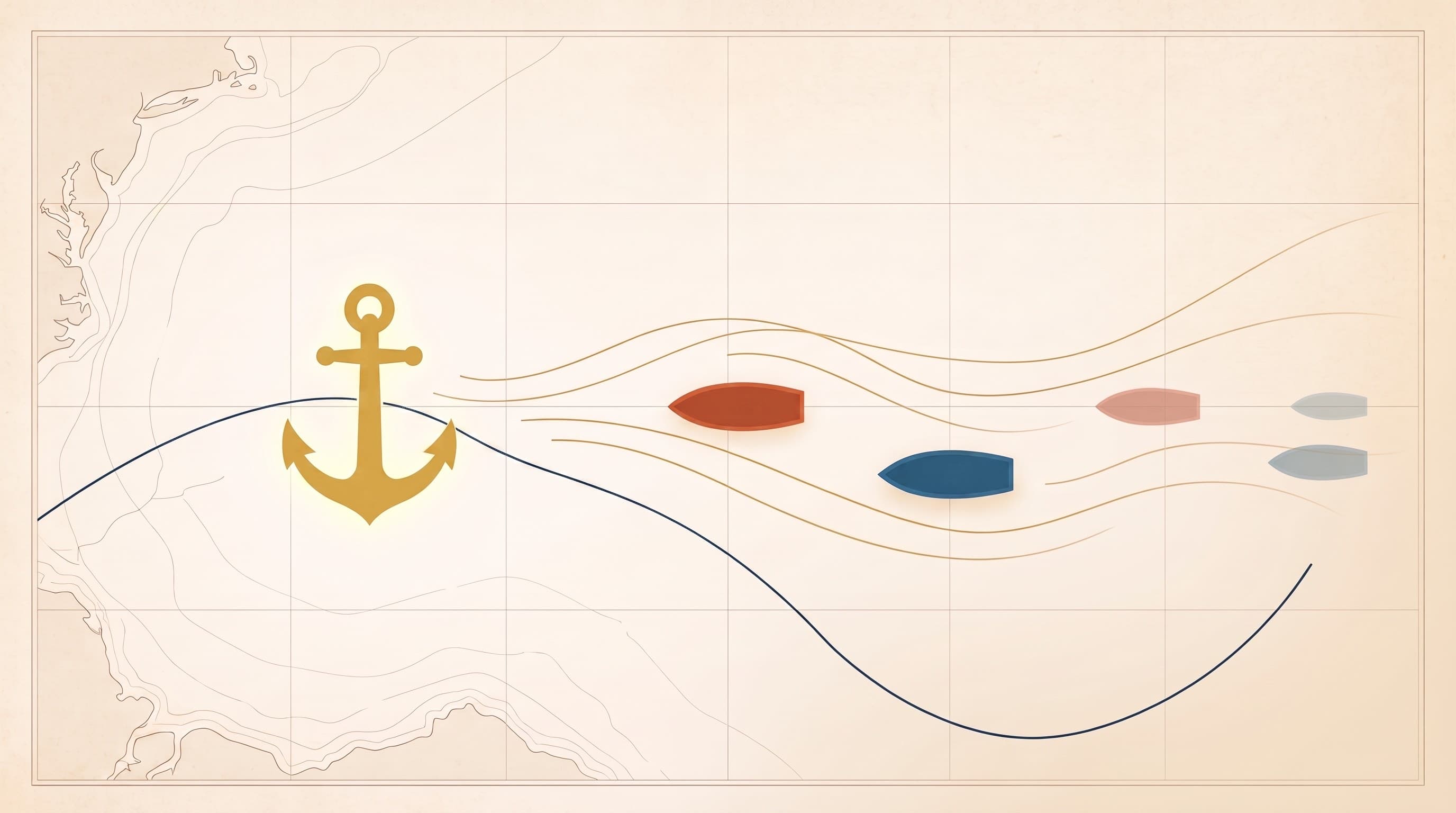
A flat-vector illustration on a warm parchment chart field: a solid golden anchor glowing at left, holding position on a thin deep-navy charted route line, while simple hull shapes in terracotta, ocean blue, and pale grey drift away to the right along thin golden current lines, each fainter than the one before, over faint coastline contours and grid lines.

July 31, 2026 · 6 min read

Why Your AI Drifts (and What Actually Stops It)

Context drift is when AI slowly stops following your instructions, sounding like you, or knowing your situation. Here's why it happens and what actually holds.

Read
A flat-vector illustration on a deep navy field: a single luminous golden channel buoy anchored right of center with its chain descending below, broad bands of thin golden current lines streaming horizontally past it, and a faint antique nautical chart behind showing terracotta and ocean-blue depth contours and a compass rose.

July 29, 2026 · 6 min read

What Is a State of the Union Anchor?

A State of the Union anchor is the context file that tells AI where you are right now — your situation, constraints, and priorities. Here's what goes in one.

Read
A flat-vector illustration on a seafoam-teal field: a hand holding a golden astrolabe over an antique nautical chart of the Portuguese coast, sighting a single luminous golden star among rows of faint grey stars, golden current lines flowing from the instrument across the chart.

July 22, 2026 · 6 min read

How to Give AI Your Writing Style (So It Actually Sounds Like You)

Pasting one sample won't make AI write in your style. The durable fix is a writing codex — extract your voice once, own it as a file, use it in every tool. Here's how.

Read
A flat-vector illustration of an antique nautical chart on parchment, one corner richly mapped in terracotta, cypress green, and navy with a golden route threading the coast, the rest of the chart still blank, a small compass rose mid-field and a golden sextant resting at the chart's edge.

July 21, 2026 · 5 min read

Dharmesh Shah Is Right About Portable AI Context. Here's the Hard Part.

HubSpot's Dharmesh Shah says portable markdown files future-proof your AI workflows. He's right. But what actually goes in the file? The hard part, explained.

Read
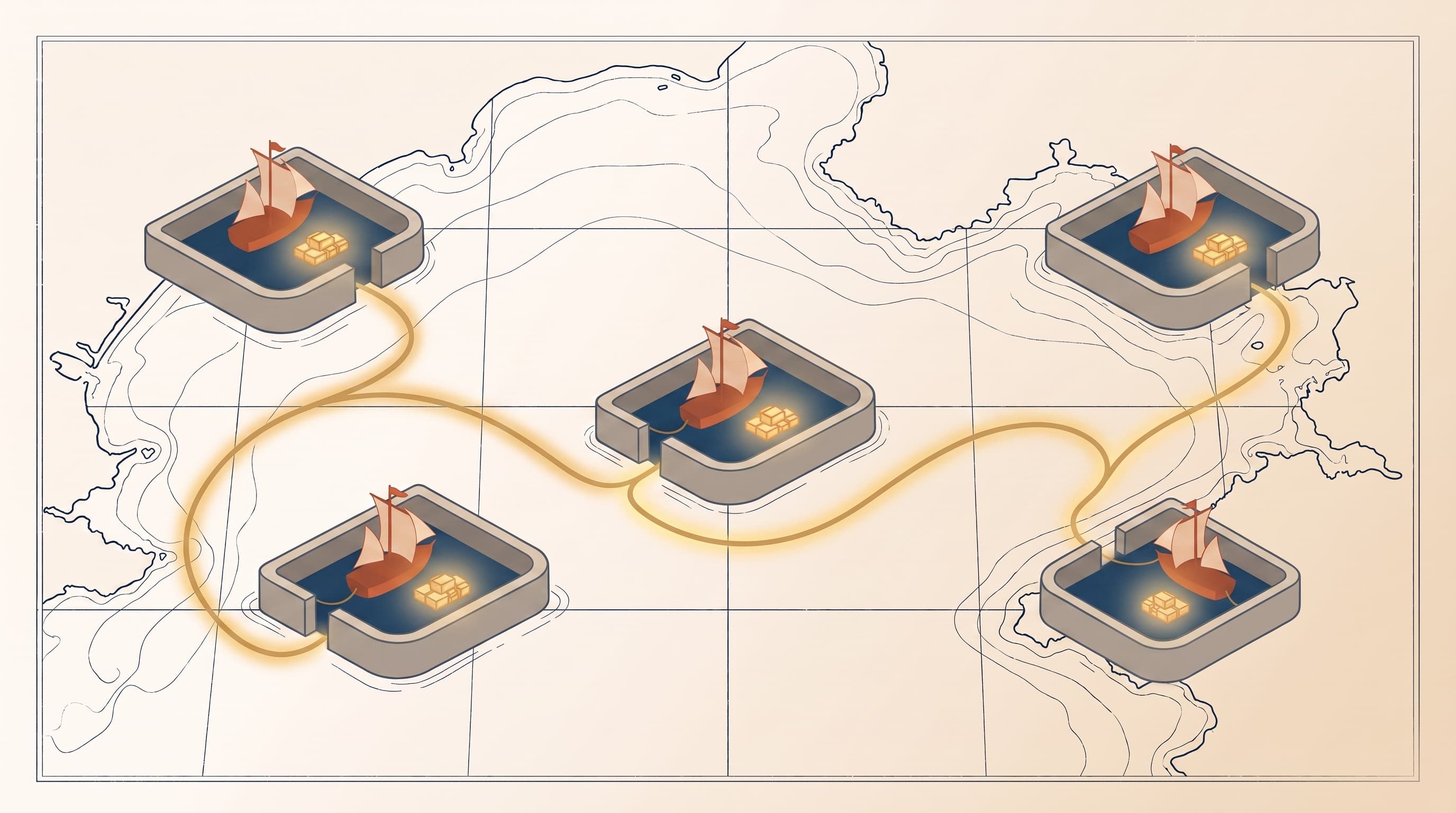
A flat-vector editorial illustration of five small ships, each moored inside its own separate walled stone harbor with a cluster of glowing golden cargo sealed inside, arranged across a faint antique nautical chart on a warm parchment field, with a single luminous golden current line threading through and connecting all five harbors.

July 13, 2026 · 6 min read

The Best Ways to Give AI Lasting Memory (2026), Compared

ChatGPT remembers you. Claude doesn't, unless you tell it. Gemini keeps its own notes. Here are the real ways to give an AI lasting memory, compared — and the one that actually travels from tool to tool.

Read
A flat-vector illustration of a single luminous golden anchor set into an antique nautical chart, golden current lines radiating outward across a deep navy field.

June 30, 2026 · 5 min read

What Is a Context Anchor?

A context anchor is one durable piece of who you are — your values, your voice, your situation — written once and reused in every AI tool, so the model works from a real foundation instead of guessing.

Read
A flat-vector illustration of a single luminous golden seal pressed into a warm-sand antique sea chart, its imprint radiating as golden current lines out to several small distant harbors, with terracotta and ocean-blue accents.

June 26, 2026 · 6 min read

How to Train ChatGPT on Yourself (What Actually Works)

You can't really train ChatGPT on your own data — but you can get the result you're after. Here's what training actually means, what works instead, and how to make any AI know you.

Read
A flat-vector illustration of a glowing ship's logbook tethered by a golden chain to a single lit harbor on a deep navy chart, while the open sea beyond stays dark, with faint golden current lines.

June 25, 2026 · 6 min read

How to Make ChatGPT Remember You

ChatGPT can remember you better than most people realize. Here's how to turn on memory, custom instructions, and projects, where each one stops working, and what to do instead.

Read
A flat-vector illustration of a brass navigator's compass setting a bearing over an antique nautical chart, a single golden heading-line extending ahead while faint instruction notes wait off to the side, on a deep teal field with azulejos-blue and ochre accents.

June 24, 2026 · 4 min read

Direction Before Instructions: Why a Better Prompt Won't Make AI Less Generic

You can write the perfect prompt and still get a generic answer. Here's why — the difference between giving your AI instructions and giving it direction, and why durable context, not better prompting, is what finally makes AI sound like you.

Read
A flat-vector illustration of a single luminous keystone anchored in an antique nautical chart, golden current lines radiating upward from it across a deep navy field.

June 18, 2026 · 5 min read

What Is a Personal Constitution? (And How to Write One for Your AI)

A personal constitution is a short document of your values, beliefs, and non-negotiables. It's the foundation your AI needs to sound like you — and you can write one in thirty minutes.

Read
A flat-vector illustration of several charted routes crossing an antique nautical map, where only one continuous golden current line completes the full crossing while the others stop short, on a deep navy field.

June 18, 2026 · 5 min read

The 4 Ways to Give Your AI Context, Compared

Re-explaining yourself, platform memory, per-tool setups, or portable context anchors — there are four ways to give your AI context, and they're not equal. Here's how they compare and which one lasts.

Read
A flat-vector illustration of three separate lighthouses on a deep navy chart, each casting its own isolated beam, with faint golden current lines failing to connect them.

June 15, 2026 · 5 min read

ChatGPT Memory, Claude Projects, and Why Your AI Still Forgets You

ChatGPT memory and Claude Projects both try to remember you — but each one keeps its notes in a private room the others can't read. Here's the difference, and what a portable context anchor does instead.

Read
A flat-vector illustration of six glowing anchor symbols in jewel tones — terracotta, teal, gold, violet, and ocean blue — arranged in a constellation across a deep navy chart and linked by golden current lines.

June 9, 2026 · 4 min read

The Six Context Anchors, Explained

A Context Anchor is one durable piece of who you are, written once and reused everywhere. Here are the six — Personal Constitution, Writing Codex, Story Bank, State of the Union, Timeline, and Influence Roster — and which to build first.

Read

A flat-vector illustration of a glowing compass on an antique world map, with golden current lines flowing across a deep navy field.

June 8, 2026 · 6 min read

How to Give Your AI Context So It Actually Knows You

Your AI sounds generic because it doesn't know you. Here's how to give it durable context once — your role, voice, and situation — and reuse it across every tool.

Read