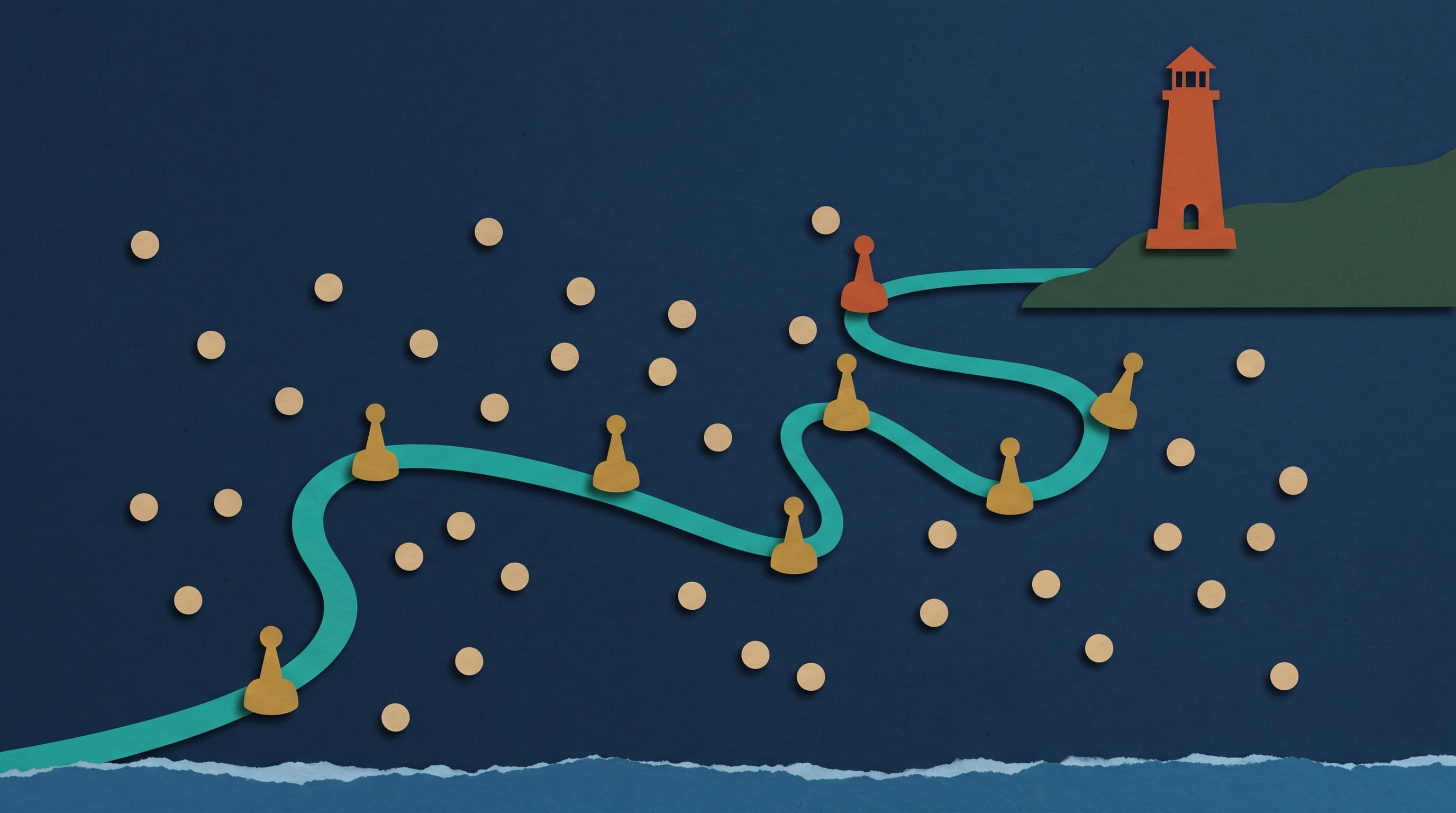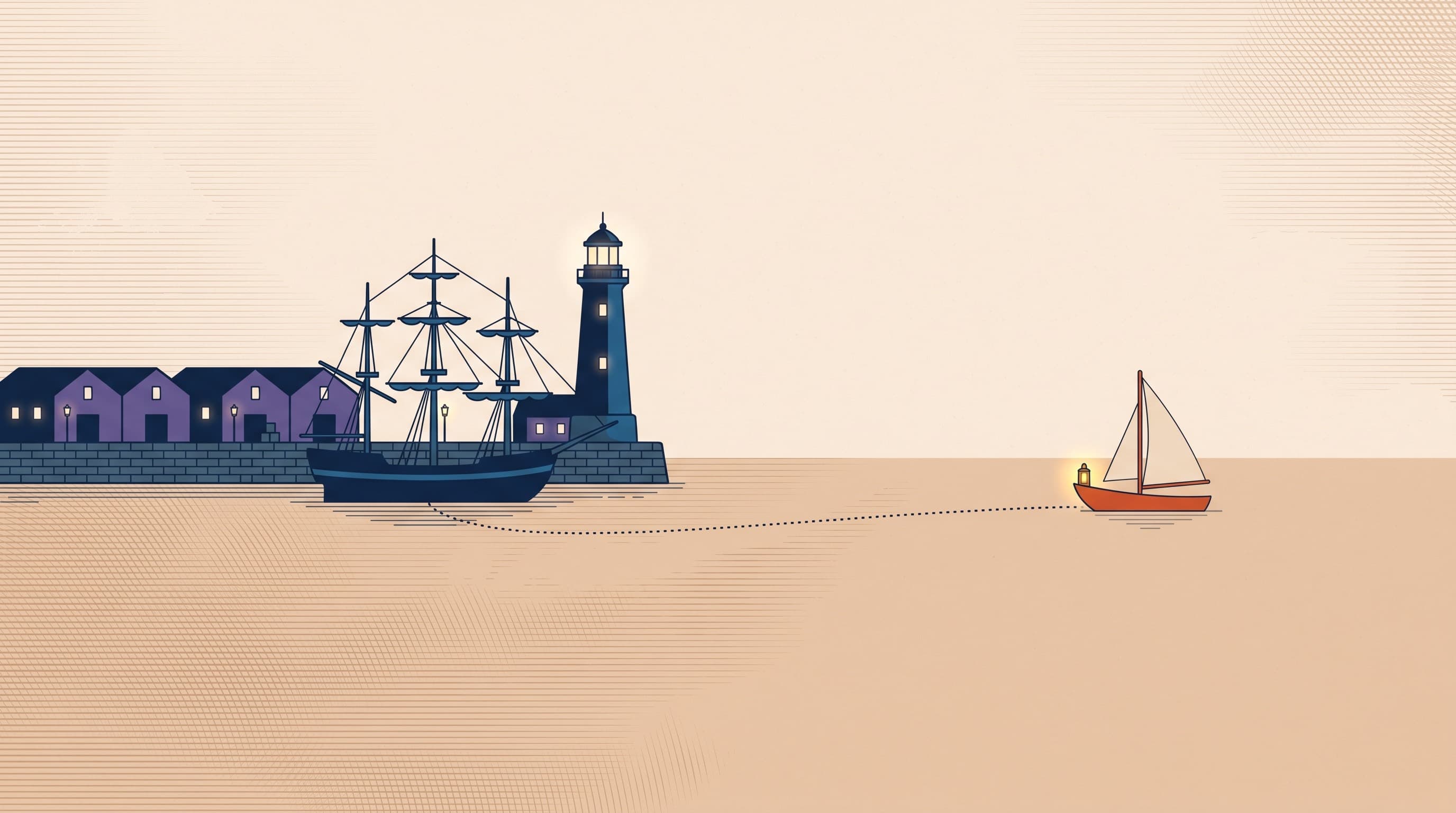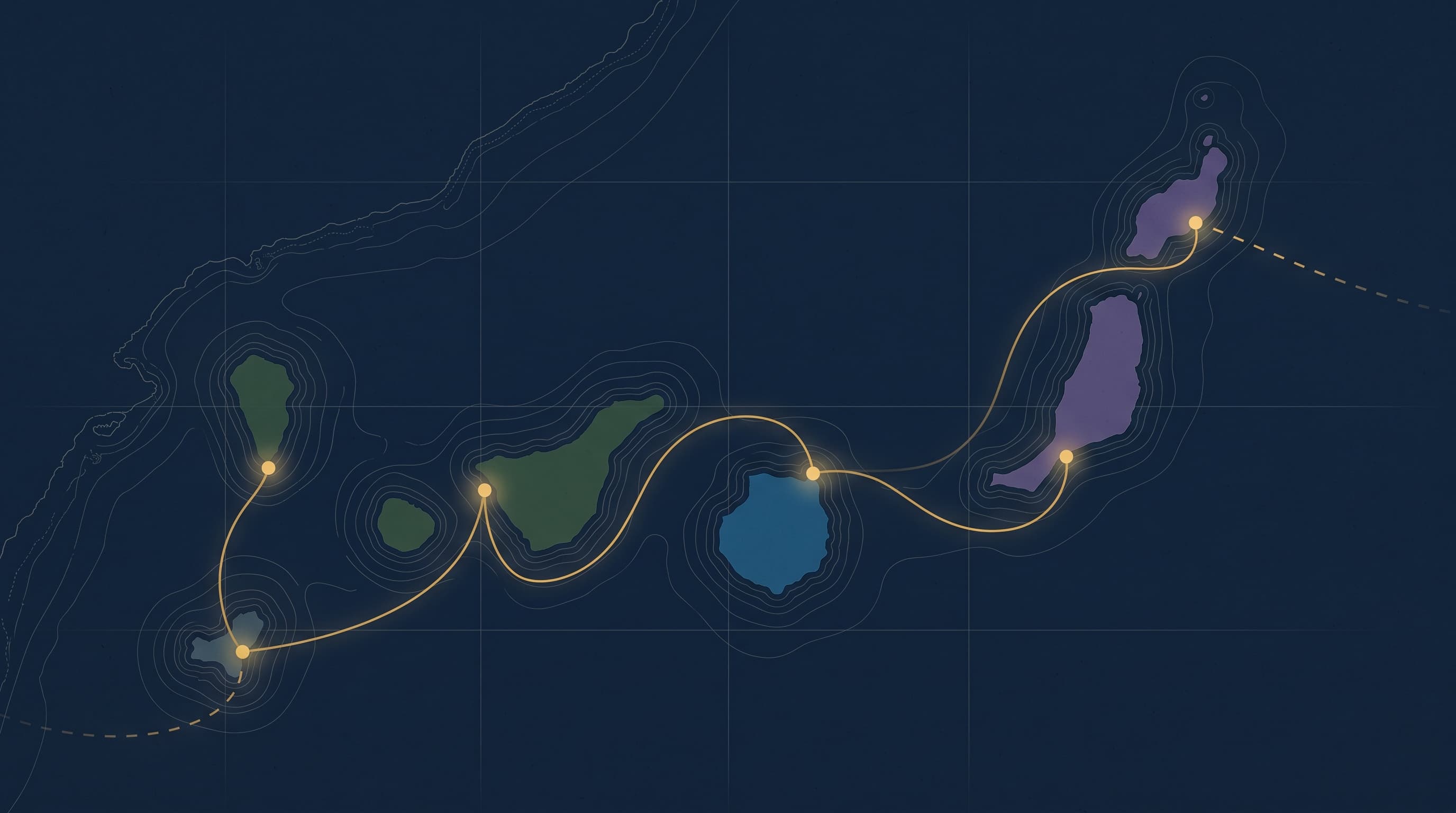
Ask an AI assistant for advice and it answers as though this were the first time you had faced the question. That is not the model underestimating you. It has no record of you having faced anything before — no sense of what you have already tried, what it cost, or how it turned out.
Five of the six context anchors describe who you are right now. This one describes how you got here.
What is a Timeline anchor?
A Timeline anchor is a short document that gives AI the arc of your life in order: the chapters you've lived, the turning points that made them, roughly when each one happened, and where the whole thing seems to be heading. It's one of the six context anchors. The other five describe who you are. This one describes your trajectory.
Most context work is present tense. Here's who I am, here's how I sound, here's what I'm dealing with this month. All useful. All standing still.
The thing is, nobody actually makes decisions in the present tense. You make them out of everything that already happened to you, and a model that can't see any of that is reading one frame of a film and calling it the plot.
Isn't that just a résumé?
No, and the difference is the whole point.
A résumé is a document with an audience. It's edited to sell forward, which means it quietly removes exactly the parts that explain you: the job you left in eight months, the year you didn't work, the move that didn't take, the business that closed. Those are the load-bearing entries. That's where the instincts came from.
A Timeline has no audience. Nobody's hiring off it. It can hold the eight-month job and the bad year and the thing you're still a little embarrassed about, because its only purpose is to be accurate about how you got here.
Write the résumé version and you'll hand your AI a highlight reel of a stranger who never lost anything.
How is a Timeline different from a Story Bank?
They get collapsed constantly, and they're doing two different jobs.
A Story Bank holds the stories themselves, chosen because you keep retelling them. It's material, and it's unordered on purpose. A Timeline holds the sequence: what happened, roughly when, and what it made possible next.
Your Story Bank is the photographs. Your Timeline is the order they go in, the dates on the back, and the fact that the good one comes right after the year you'd rather skip.


And it's a different clock than your State of the Union, which is a snapshot of right now and goes stale in a season. A Timeline mostly grows. You add to the end of it a few times a year, and everything already written stays true. The people who keep showing up across those chapters get a file of their own, your Influence Roster, because who was in the room is a different record than when it happened.
What actually goes in one?
One entry per moment that changed something, and four things per entry.
A year. Approximate is fine, and approximate is usually all anybody has. Sequence carries more weight than precision.
A title, in your language. "The contract years." "The move." "The one that didn't take." Not a job title, not a LinkedIn headline. Write it the way you'd say it to someone at a table.
A few plain sentences. What happened, and what it changed. Two or three lines. This is a log, not a memoir, and the compression is the reason you'll still be adding to it in a year.
The chapter it belongs to. Which era of your life this sits inside. Optional in the sense that a keel is optional.
Fifteen to twenty-five entries is a working Timeline. You can build the first draft in an evening, and the digging goes faster than you'd think once you accept that photos are better evidence than memory.
What difference does it actually make?
You stop getting the beginner's version of moves you've already made.
Ask a model whether to take on a big client that would eat your calendar, and with no history it will hand you a clean, sensible framework. Ask it with your arc loaded and something else happens. It notices you've been here before — not this exact client, but this exact shape. If your Timeline records two earlier versions of the same deal, years apart, both logged with the same reasoning, the model can put those in front of you before you decide — including how each one actually went.
That's not a smarter model. That's a model that can finally see a pattern, because the pattern only exists across time, and time was the one thing you'd never written down.
Consider what that rules out. Every piece of AI advice that treated you like a first-timer wasn't the model underestimating you. It just had no evidence you'd ever done anything before.
Where do the chapters come from?
Here's the part I didn't expect.
You can't name a chapter from inside it. You know something is happening, and you know it's different from what came before, but the title only arrives later — once the thing is over and the shape holds still long enough to be looked at. So you write the entries first, in order, and then you read them in one sitting, and the seams show up on their own. Four years cluster. Something ends. Something else starts a season later.
Then comes the useful part, which has nothing to do with AI. Once you've named the chapters, you can tell whether you're currently inside one or standing between two. Those feel identical while you're living them, and they call for completely different decisions.
Most of the drift and restlessness people describe to me is just an unnamed chapter break. You're not lost. You're between.
How far back do you go?
As far back as something is still load-bearing.
For most people that's the first real decision they made on their own, not the day they were born. Childhood earns a line where it explains a pattern that's still running, and no lines at all where it doesn't. Density beats reach every time. Twelve entries from the last five years will do more work than a thin scatter across four decades, because recent history is what your next decision actually rhymes with.
Where to start
Open a blank document and write down five moments without which your life goes somewhere else. Don't rank them, don't polish them, just get them in order and put a year beside each.
That's the spine. Everything after it is filling in. If you'd rather be asked than face the blank page, that's what context mining is for, and you can build yours at /anchors/timeline. If you're starting from nothing at all, start instead with your Personal Constitution and come back for this one.
The entries are the easy part. The value arrives later, the first time an assistant tells you that you have been here before and turns out to be right.
That only works if the record exists. Nothing else you hand a model can reconstruct it, because the pattern lives in the order — and the order is the part almost nobody writes down.
Frequently Asked Questions
- What is a Timeline anchor?
- A Timeline anchor is a short document that gives AI the arc of your life in order: the chapters you've lived, the moves and turning points that made them, roughly when each one happened, and where the whole thing seems to be heading. It's one of the six context anchors. The others describe who you are. This one describes your trajectory.
- What goes in a Timeline anchor?
- One entry per moment that changed something, and four things per entry: a year, a short title in your own language, a few plain sentences on what happened and what it changed, and the life chapter it belongs to. Fifteen to twenty-five entries is a working Timeline. The chapter labels are the part that pays you back.
- How is a Timeline different from a Story Bank?
- A Story Bank holds the stories themselves, unordered, chosen because you keep retelling them. A Timeline holds the sequence: what happened, roughly when, and what it made possible next. The bank is the photographs. The Timeline is the order they go in and the dates on the back. Same life, two different jobs.
- How far back should my Timeline go?
- As far back as something is still load-bearing. For most people that's the first real decision they made on their own, not their birth. Childhood earns a line only where it explains a pattern that's still running. Density matters more than reach, and the last five years usually deserve the most entries.
- Why does AI give me advice that ignores my history?
- Because it can't see any. A model reading only your present situation treats every decision as a first attempt, so it hands you the beginner's version of a move you've already made twice. Give it your arc and it starts noticing repeats, which is where most genuinely useful advice comes from.